

The value of Earth observation is realized when scientific rigor, engineering and communication connect complex data to real-world mission needs.
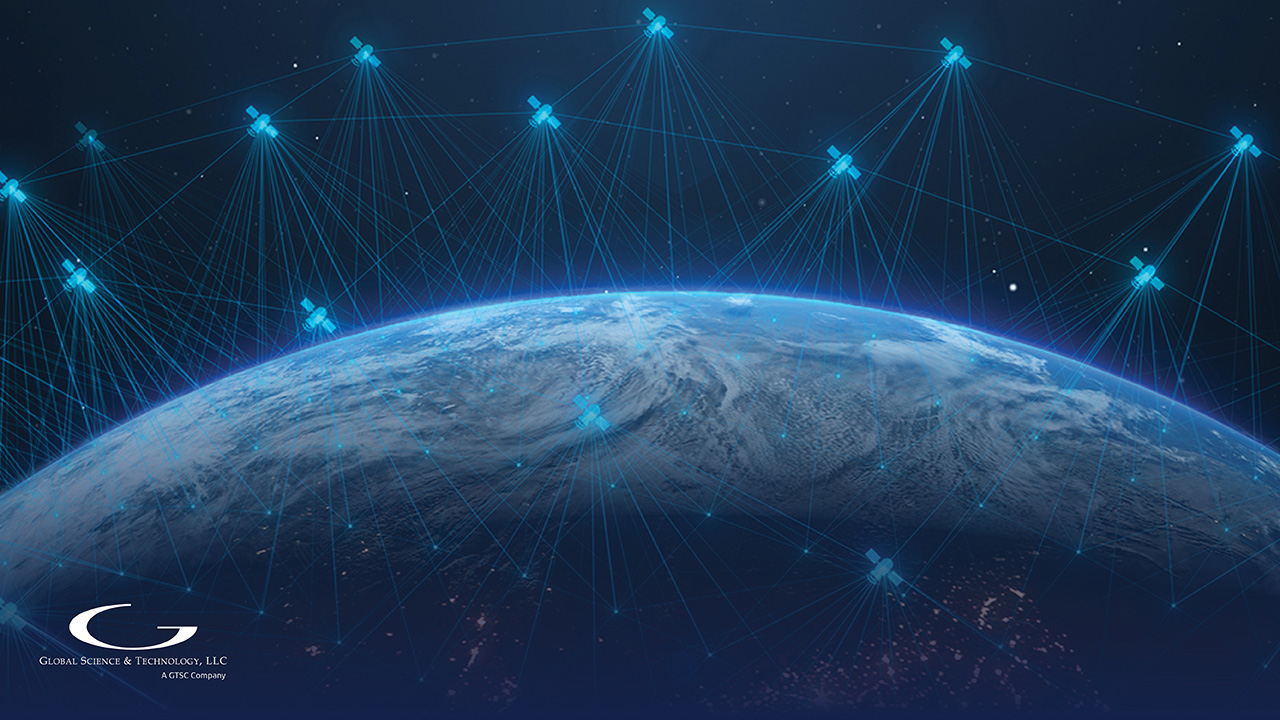
Satellites produce extraordinary amounts of information about our planet, but data alone does not answer a question, improve a forecast or help someone make a decision.
People do.
Scientists must validate the observations. Engineers must build and maintain the systems that process them. Data specialists must make information accessible. Communicators and application experts must help users understand what the science can tell them.
That connection between observation and application is where science creates mission impact.
Global Science and Technology (GST), a GTSC portfolio company, supports federal science agencies including NASA and the National Oceanic and Atmospheric Administration across science, engineering, IT and program support missions.
Observation Is Only the Beginning
GST’s recent discussion of the NASA-ISRO Synthetic Aperture Radar mission highlighted the extraordinary potential of new Earth observation capabilities.
But every new observing system also creates another challenge: turning increasingly sophisticated observations into reliable information that scientists, agencies and other users can apply.
That process requires an ecosystem.
Satellite data must be acquired, processed, calibrated, validated, archived, analyzed and made available. Algorithms must be evaluated. Products must meet scientific quality standards. Systems must manage increasing volumes of information without sacrificing availability or performance.
None of those functions operate independently.
Scientific Quality Creates Trust
For science agencies, trust in the data is essential.
GST’s work supporting NOAA’s Satellite Oceanography and Climatology Division includes scientific analysis of global ocean remote-sensing data, calibration and validation, statistical analysis and development of satellite-derived products related to ocean conditions. These products support applications ranging from forecasting and climate research to understanding coastal and ocean environments.
That work illustrates an important point about federal science missions.
Better decisions begin with credible science.
Scientific rigor may occur far upstream from the final user, but it directly affects the quality of everything downstream.
Science Missions Also Depend on Engineering
Scientific discovery increasingly depends on sophisticated technology infrastructure.
GST has supported large federal science data environments across the IT life cycle, including requirements, design, development, testing, operations and sustainment. Our work has included large-scale environmental data systems, cloud computing, software development and cybersecurity for NASA and NOAA missions.
This intersection of science and engineering is increasingly important.
As instruments collect more data and scientific models become more sophisticated, agencies need systems capable of processing, storing and distributing information reliably and efficiently.
Scientists and engineers therefore cannot operate in separate lanes. Mission success depends on both.
Science Support Extends Beyond the Satellite
The science enterprise also depends on how research itself is selected and supported.
Through NASA Research and Education Support Services, GST and our partners provide peer-review, solicitation and information-system support that help NASA manage research funding processes across multiple scientific disciplines. GST’s work includes identifying scientific reviewers, supporting review panels and maintaining systems that help manage research proposals.
That work may look different from processing satellite observations, but it serves the same larger objective: creating the infrastructure that allows rigorous science to move forward.
The Mission Is the Connection
The future of federal science will bring more sensors, greater data volumes, increasingly powerful computing environments and new opportunities to apply observations to complex challenges.
The organizations supporting those missions must be able to connect the pieces.
Science expertise must connect with engineering.
Engineering must connect with reliable systems.
Data must connect with applications.
And applications must connect with the people making decisions.
That is how observations become information, and it is how information becomes impact.
Advancing a NASA, NOAA or federal science mission that requires scientific expertise, engineering, data systems or program support? Connect with GST to explore how our multidisciplinary teams can help move complex science from observation to application.



 Laurie Sanger
 Lisa Schulze
 PAMELA EGAN
 MARY PROVUS
 DON SHOFF
 ROBERT LECH
 RAYMOND ROBERTS